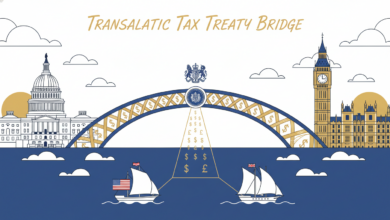
Navigating British Waters: The Essential Guide to Financial Advisors for Expats in the UK

Living in the United Kingdom as an expatriate offers a wealth of cultural experiences, from the historic charm of Edinburgh to the fast-paced financial hub of London. However, beneath the surface of pub lunches and rainy afternoons lies a complex financial landscape that can be daunting even for the most seasoned global citizen. For many, the transition involves more than just finding a flat and opening a Monzo account; it requires a sophisticated approach to managing cross-border wealth, navigating unique tax laws, and planning for a future that might span multiple continents. This is where a specialist financial advisor for expats in the UK becomes an invaluable asset.
The Unique Complexity of Expat Finances






Why can’t you just use any high-street financial advisor? The answer lies in the ‘cross-border’ element. Most domestic financial advisors in the UK are experts in serving British nationals who live, work, and retire within the UK. They understand ISAs, UK pensions, and inheritance tax from a local perspective. However, an expat’s financial life is rarely that linear.
Expats face specific challenges such as the Statutory Residence Test (SRT), which determines tax liability based on the number of days spent in the country. There is also the matter of ‘domicile’ status, which has historically offered tax advantages for non-domiciled residents (non-doms), though these rules are currently undergoing significant legislative changes. A generalist advisor might overlook these nuances, leading to costly tax leakages or even regulatory penalties.
Specialized Knowledge: Why It Matters
When you hire a financial advisor who specializes in expat services, you are paying for their ability to look at your financial life through a dual lens: your current life in the UK and your previous or future life elsewhere.

#
1. Tax Planning and the ‘Remittance Basis’
For many expats, the way they are taxed on foreign income is a major concern. Do you pay tax on your rental income from back home? What about capital gains on shares held in a foreign brokerage? An expat-focused advisor can help you decide whether to be taxed on the ‘arising basis’ (paying UK tax on worldwide income) or the ‘remittance basis’ (paying UK tax only on income brought into the country). With the UK government making changes to the non-dom regime, having an advisor who stays abreast of these policy shifts is non-negotiable.
#
2. Retirement and Pension Portability
Pensions are perhaps the most complicated part of the expat journey. If you have worked in multiple countries, you likely have a trail of retirement accounts behind you. An advisor can help you understand whether it makes sense to consolidate these into a Qualifying Recognised Overseas Pension Scheme (QROPS) or a Self-Invested Personal Pension (SIPP) within the UK. They will also help you understand the tax implications of drawing from these pensions depending on where you reside when you eventually retire.
#
3. The US Expat Dilemma (FATCA and PFICs)
If you are an American expat in the UK, your situation is uniquely challenging due to the US practice of citizenship-based taxation. Many UK investment products, like ISAs or certain mutual funds, are classified by the IRS as Passive Foreign Investment Companies (PFICs), which carry punitive tax rates. A specialist advisor who understands both the UK’s FCA regulations and the US’s SEC/IRS rules is essential to avoid a financial catastrophe.
The Role of Currency Management
Expats are naturally exposed to currency risk. If your assets are in USD or EUR but your expenses are in GBP, a sudden shift in exchange rates can significantly impact your purchasing power. Financial advisors for expats don’t just pick stocks; they help manage currency exposure. They might suggest multi-currency accounts or international investment platforms that allow you to hold assets in various denominations, providing a hedge against the volatility of the British pound.
How to Choose the Right Advisor in the UK
Selecting an advisor is a significant decision. In the UK, financial advisors must be regulated by the Financial Conduct Authority (FCA). You can check the FCA Register to ensure they are authorized to provide advice. However, beyond the basic legal requirements, consider the following:
- Credentials: Look for advisors with ‘Chartered’ status or those who hold specific qualifications in international wealth management.
- Fee Structure: Are they fee-based or commission-based? For expats, fee-based models are generally preferred as they reduce the risk of biased advice driven by product sales.
- Experience with Your Nationality: An advisor who specializes in Australian expats might not be the best fit for a Canadian expat, given the different tax treaties involved.
- Technological Integration: Since you may move again, does the advisor use digital platforms that allow you to manage your wealth remotely?
Conclusion: Peace of Mind in a New Home
Moving to the UK is a bold life choice, often driven by career aspirations or a desire for a new adventure. Managing your wealth shouldn’t be the thing that keeps you up at night. While the UK’s tax and investment landscape is undeniably rigorous, it is also full of opportunities for those who are well-advised.
By partnering with a financial advisor who understands the unique hurdles of the expatriate lifestyle, you can ensure that your wealth is protected, your tax burden is optimized, and your long-term goals remain on track—no matter where in the world your journey leads you next. After all, the goal of financial planning isn’t just to accumulate wealth; it’s to provide the freedom to enjoy your life in your new home without the shadow of financial uncertainty.